
Free Download: My Query-Tracking Spreadsheet
Any other hyper-organized authors out there?
Or, do you just love a good, FREE writing / querying tool?

You might not be able to tell from my writing station (sticky notes everywhere, a dozen tabs open on my laptop, etc… #iykyk), but I do love an organized space! Cute planners, digital folders, and checklists help me stay sane and feel accomplished.
Organization doesn’t stifle my creativity; it empowers it by tracking the little things so I don’t have to. The big picture’s easier to digest when you’re not stressing the brush strokes.
Querying’s where I found myself DESPERATELY needing some organization to stay sane!
If you’re approaching the querying stage and aren’t sure where to start with keeping everything organized, don’t stress! I’ve got a starting point for you to keep track of all the information you’ll need - from agent details to nudge timeline to informational links - in one spot.
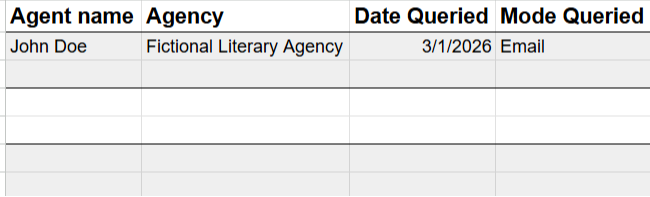
My Query-Tracking Spreadsheet is the perfect tool that I actually use in my querying journey.
Distinguishable rows that you can add to / duplicate as you query more agents.
Columns for every major detail you’ll need.
Space to add your own notes / comments.
An example row to show the kind of notes I take in each column!
With all of the above and more, it’s the perfect master-sheet for all your pending submissions.
Snag your own editable Excel Spreadsheet below!
Now that you have your own tracking tool, check out my Query-Tracking Spreadsheet FAQ’s below:
-
Every agent/agency has their own preferences on how they like to receive queries. While most are on (or moving to) QueryTracker, some still use an online agency website form, email, or even snail-mail. So, use this column to track your method of communication at a glance.
-
The “Response Timeline / Notes” column is to track when the agent should be reaching back out to you; the “Nudge?” column is to track when you should be reaching back out to the agent.
Pay VERY close attention to these details, as many agents have specific guidelines on when they want to be nudged (if at all) and how. Following their guidelines not only helps you get a response, but it also shows your professionalism and attention to detail.
-
Before you query any agent, you should ALWAYS be researching them! This means looking over their agency’s website (and reading the agent bios/submissions pages in depth), seeing if the agent has an individual blog/social media page, and looking the agent up on manuscriptwishlist.com. This process is for your benefit AND for the agent’s benefit to ensure you’re both a potential good fit.
Note: If nothing else, I recommend always saving the agency’s “Submissions” page link, in case you get a partial/full manuscript request later. There are normally guidelines on how to format/submit these as well, so you’ll need to come back to these links later.
-
These columns are just for you! Fill them to the brim with notes on your first impressions of the agent/agency and how well you suspect you’d fit in a professional dynamic with them. Of course, there’s no way to predict everything; if you receive an offer, you’ll want to judge the relationship more thoroughly over a phone call, etc. However, record your true reasons for why an agent stood out to you (helpful in personalizing your query letter) as well as any hesitations you have about working with them (helps you manage your own expectations and soften the blow of inevitable rejections).
-
Don’t stress it! This column is really for QueryTracker and agency online form confirmation pages. Email submissions may or may not send an automatic confirmation message, and snail-mail definitely won’t.
Note: Only be concerned if you’re expecting a confirmation page (ex. the agency website says you should receive one) but did not receive one. At that point, dig into QueryTracker comments and see if others are experiencing the same issue, and even reach out to the agency to ensure they received your query. Tech issues happen in the industry, and everyone gets that!
“Organization is the bridge between goals and results.”